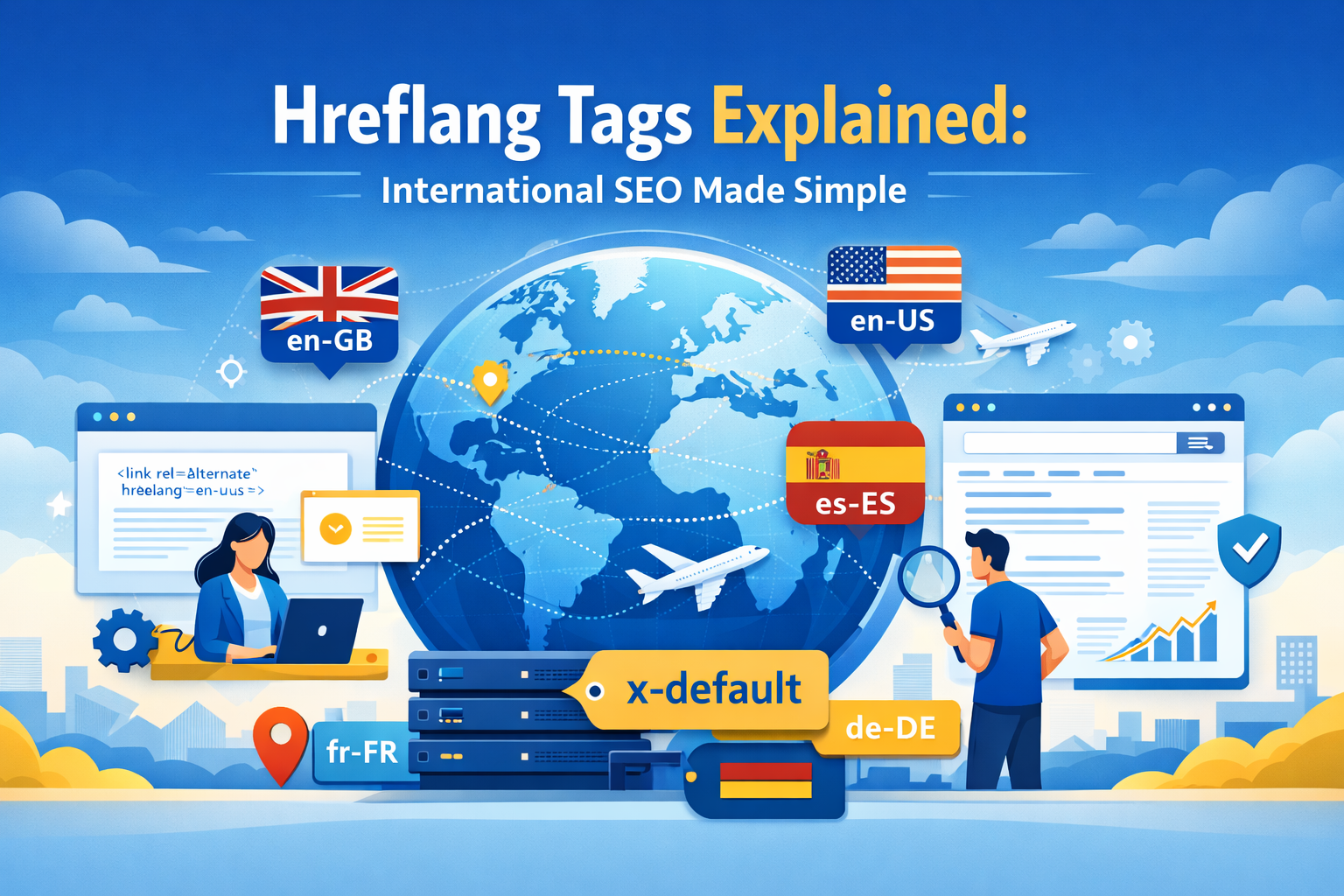
Hreflang Tags Explained: International SEO Made Simple
If you run a website targeting users in multiple countries or languages, you’ve probably faced a common problem: showing the right content to the right audience. That’s where hreflang tags come in.
Hreflang tags are essential for international SEO. They tell search engines which version of your page should appear for users based on their language and location. Without them, your website might show the wrong version—or worse, suffer from duplicate content issues.
In this guide, we’ll break down hreflang tags in simple terms, show how they work, and help you implement them correctly using practical tools.
What is Hreflang Tags Explained: International SEO Made Simple
Hreflang tags are HTML attributes used to indicate the language and geographical targeting of a webpage. They help search engines understand which version of a page to show to users in different regions.
For example:
- English version for the US: en-us
- English version for the UK: en-gb
- Spanish version: es-es
By using hreflang tags, you can ensure users see content that matches their language preferences and location.
Why it is important
Hreflang tags play a critical role in international SEO. Without them, search engines may struggle to determine which version of your content to display.
- Avoid duplicate content: Prevents SEO penalties
- Improve user experience: Users see content in their language
- Boost global rankings: Better targeting improves visibility
- Increase conversions: Relevant content leads to better engagement
If your website targets multiple countries, hreflang is not optional—it’s essential.
Step-by-step guide
1. Identify your target regions
Decide which countries and languages you want to target.
2. Create separate URLs
Use different URLs for each version, such as /en/, /us/, or /es/.
3. Add hreflang tags
Insert hreflang tags in the head section of your HTML.
4. Use correct language codes
Follow ISO language and country codes like en-us or fr-fr.
5. Add self-referencing tags
Each page should reference itself as well.
6. Test implementation
Use tools to verify that your hreflang tags are correct.
Best tools to use
Here are some useful tools to help you implement and test hreflang tags:
- Hreflang Generator – Easily create hreflang tags
- Canonical URL Checker – Avoid duplicate issues
- Meta Tag Generator – Generate SEO tags quickly
- HTTP Status Checker – Ensure pages load correctly
- Redirect Checker – Verify proper redirects
You can also explore Understanding DNS: A Beginner's Guide to Domain Name Systems and Content Marketing Toolkit: 15 Free Tools to Boost Your Strategy for broader SEO knowledge.
Tips and best practices
- Always use absolute URLs in hreflang tags
- Ensure all language versions reference each other
- Use x-default for fallback pages
- Keep language and country codes accurate
- Regularly audit hreflang implementation
Following these practices ensures your international SEO strategy works effectively.
Common mistakes
- Using incorrect language codes
- Missing return links between pages
- Pointing hreflang to non-canonical URLs
- Not updating hreflang after site changes
- Mixing languages on the same page
Even small mistakes can impact your SEO performance, so always double-check your setup.
Conclusion
Hreflang tags are a powerful tool for international SEO. They help search engines deliver the right content to the right audience, improving both user experience and rankings.
By implementing hreflang correctly and using the right tools, you can expand your reach globally and ensure your website performs well across different regions.