10 Free SEO Tools Every Website Owner Should Use in 2026
SEO in 2026 is no longer just about keywords. It’s about performance, user experience, technical optimization, and smart analysis. Whether you run a blog, an eCommerce store, or a business website, having the right SEO tools can make a huge difference.
The best part? You don’t need expensive subscriptions to get started. There are powerful free SEO tools that can help you analyze, optimize, and grow your website effectively.
In this guide, we’ll explore 10 free SEO tools every website owner should use in 2026. These tools will help you improve rankings, increase traffic, and stay ahead of competitors.
What is 10 Free SEO Tools Every Website Owner Should Use in 2026
This list includes essential SEO tools that cover different aspects of optimization. From technical SEO to performance tracking, these tools help you understand how your website performs and where improvements are needed.
Instead of guessing, you can rely on data-driven insights to make better decisions. These tools are designed for beginners as well as experienced professionals.
Why it is important
SEO tools help you identify issues that may be affecting your website’s performance. Without them, you’re basically working blind.
For example, slow loading speed can hurt your rankings. Tools like Core Web Vitals Snapshot and Website Speed Checker help you measure performance and improve user experience.
Similarly, broken links, missing meta tags, and indexing issues can reduce your visibility in search engines. SEO tools help detect and fix these problems quickly.
Step-by-step guide
Here’s how you can use SEO tools effectively:
Step 1: Start with a website audit using technical tools.
Step 2: Analyze performance metrics like speed and Core Web Vitals.
Step 3: Check on-page SEO elements such as meta tags and keywords.
Step 4: Identify and fix broken links or indexing issues.
Step 5: Monitor results and keep optimizing regularly.
Best tools to use
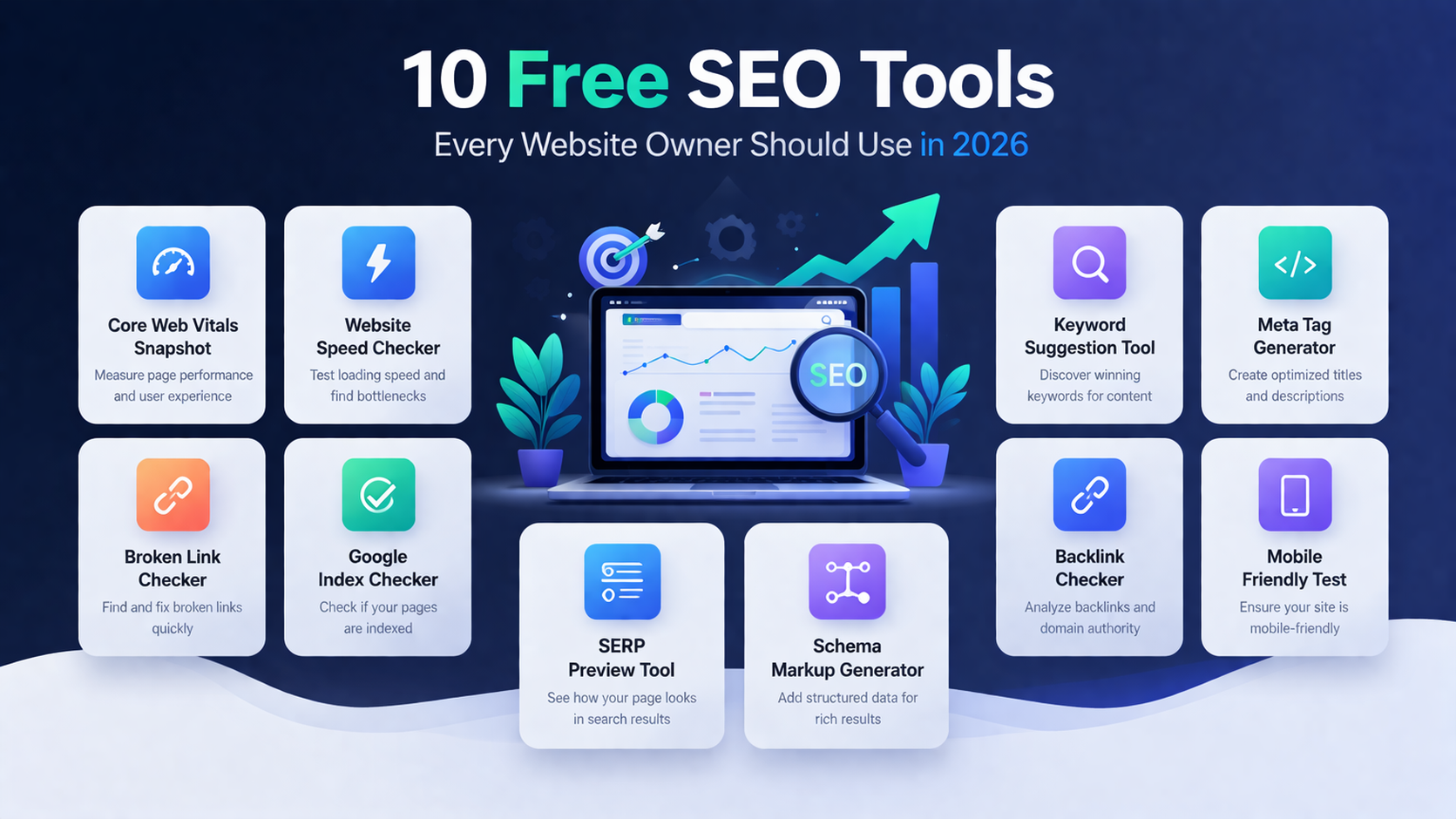
Here are 10 free SEO tools every website owner should use in 2026:
- Core Web Vitals Snapshot – Analyze performance metrics like LCP, CLS, and FID.
- Website Speed Checker – Test loading speed and identify bottlenecks.
- Keyword Suggestion Tool – Find relevant keywords for your content.
- Meta Tag Generator – Create optimized meta titles and descriptions.
- Broken Link Checker – Detect and fix broken links.
- Google Index Checker – Check if your pages are indexed.
- Backlink Checker – Analyze backlinks and authority.
- Mobile Friendly Test – Ensure your site works well on mobile devices.
- SERP Preview Tool – Preview how your page appears in search results.
- Schema Markup Generator – Add structured data for better visibility.
For deeper understanding, check out Image Optimization Guide: How to Speed Up Your Website and Complete Guide to Schema Markup: Boost Your Search Visibility.
Tips and best practices
Focus on user experience: SEO is not just about rankings; it’s about providing value to users.
Use multiple tools: No single tool covers everything. Combine tools for better results.
Monitor regularly: SEO is an ongoing process, not a one-time task.
Optimize for mobile: Most users browse on mobile devices.
Track performance: Always measure improvements after making changes.
Common mistakes
Many website owners rely only on keywords and ignore technical SEO. This can limit growth.
Another mistake is not fixing broken links. These can harm user experience and SEO.
Some users also ignore mobile optimization, even though it is a major ranking factor.
Lastly, not using data from SEO tools leads to poor decision-making.
Conclusion
SEO in 2026 requires a smart and data-driven approach. The tools listed above can help you identify problems, optimize your website, and improve rankings without spending money.
Start using these tools today and take your website to the next level.